

banner

Vibratory vs. Thermal Stress Relieving

Comparing Two Approaches to Residual-Stress Management
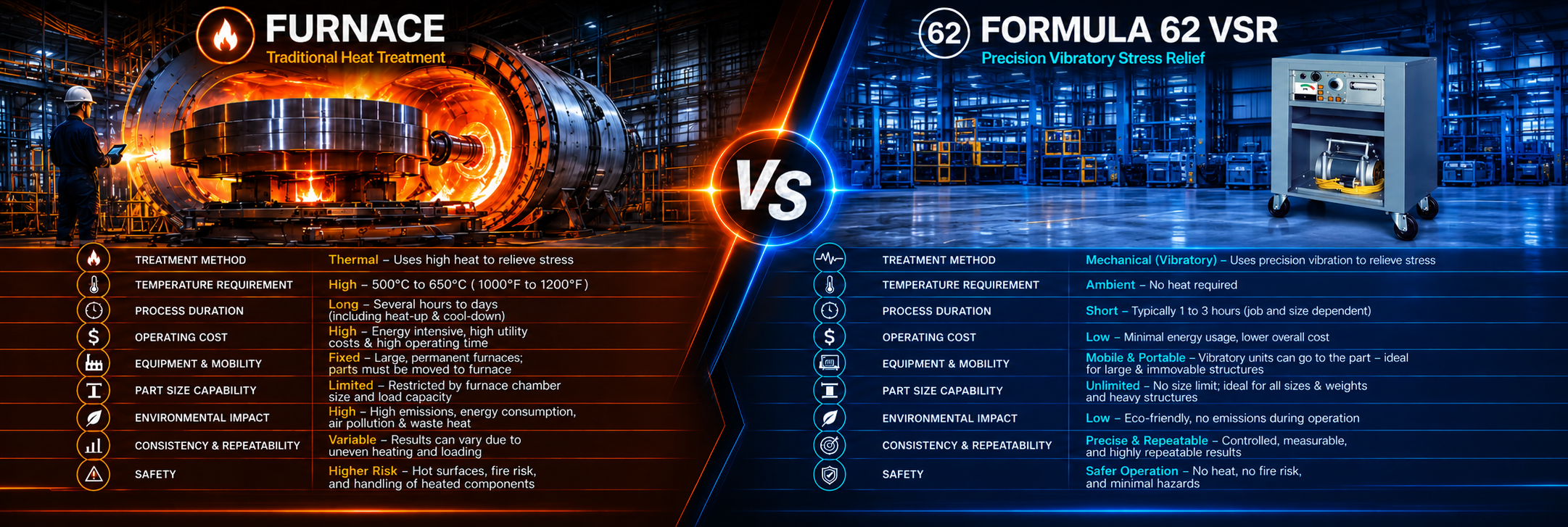
Formula 62® VSR provides a rapid, non-thermal alternative to conventional furnace stress relieving for suitable components and applications. It is not a universal replacement where thermal PWHT is mandatory.

Calculate VSR Cost Savings

VSR vs. Traditional Thermal Stress Relieving

Traditional furnace stress relieving can involve heating and cooling cycles, extended processing time and transportation requirements. Formula 62® VSR offers a non-thermal At-Site alternative for suitable applications.

Parameter Formula 62® VSR Thermal Stress Relieving
Processing Time Approx. 30–60 min per treatment zone Extended heating, soaking and controlled cooling cycle
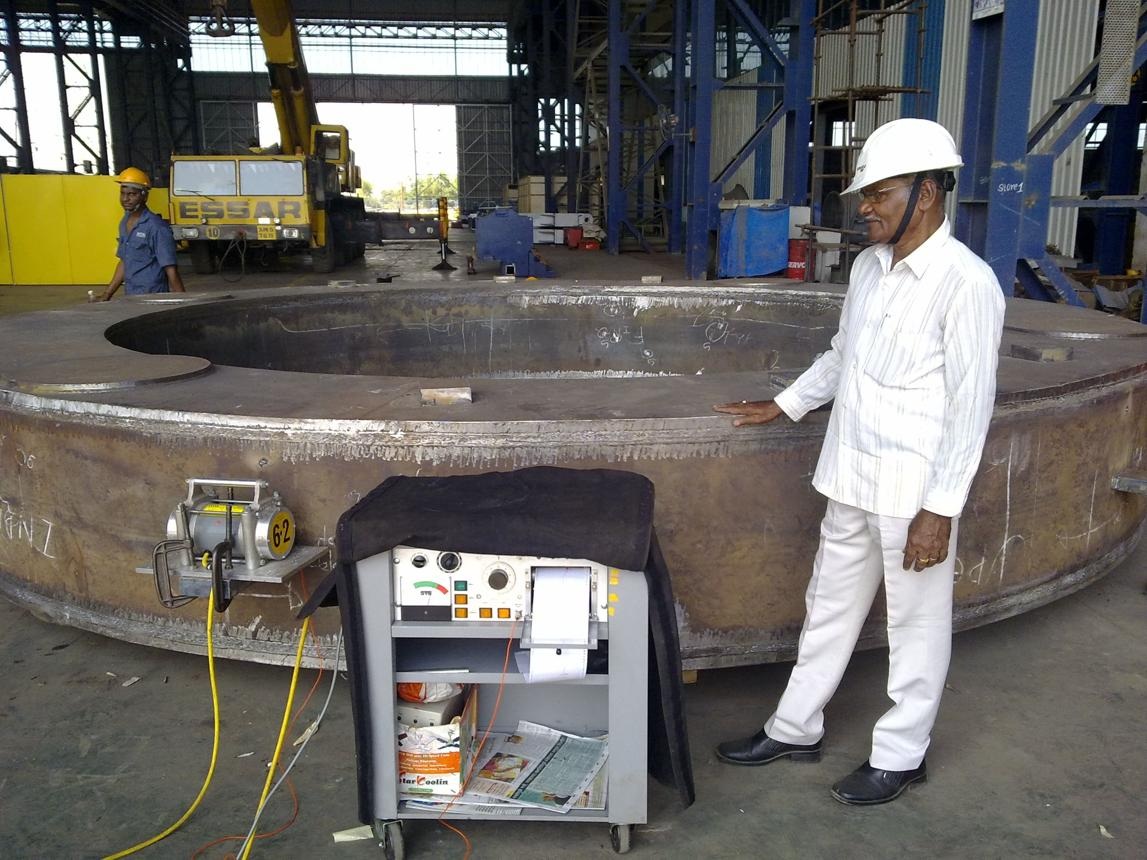
Component Size & weight Large/heavy components can be treated At-Site Limited by furnace capacity and transport logistics
Surface condition No furnace scale or heat-induced oxidation May require post-treatment descaling/cleaning
Transportation Can reduce or avoid transport to heat-treatment facility Often requires transport/handling for external furnace treatment
Thermal distortion Avoids furnace heating/cooling, helping minimize heat-induced distortion Thermal cycle may introduce dimensional change depending on component
Material properties Avoids elevated treatment temperature; preserves existing properties subject to application Thermal cycle intentionally exposes material to elevated temperature
Energy requirement Significantly lower energy requirement than furnace heating for suitable applications High energy demand for heating furnace and component
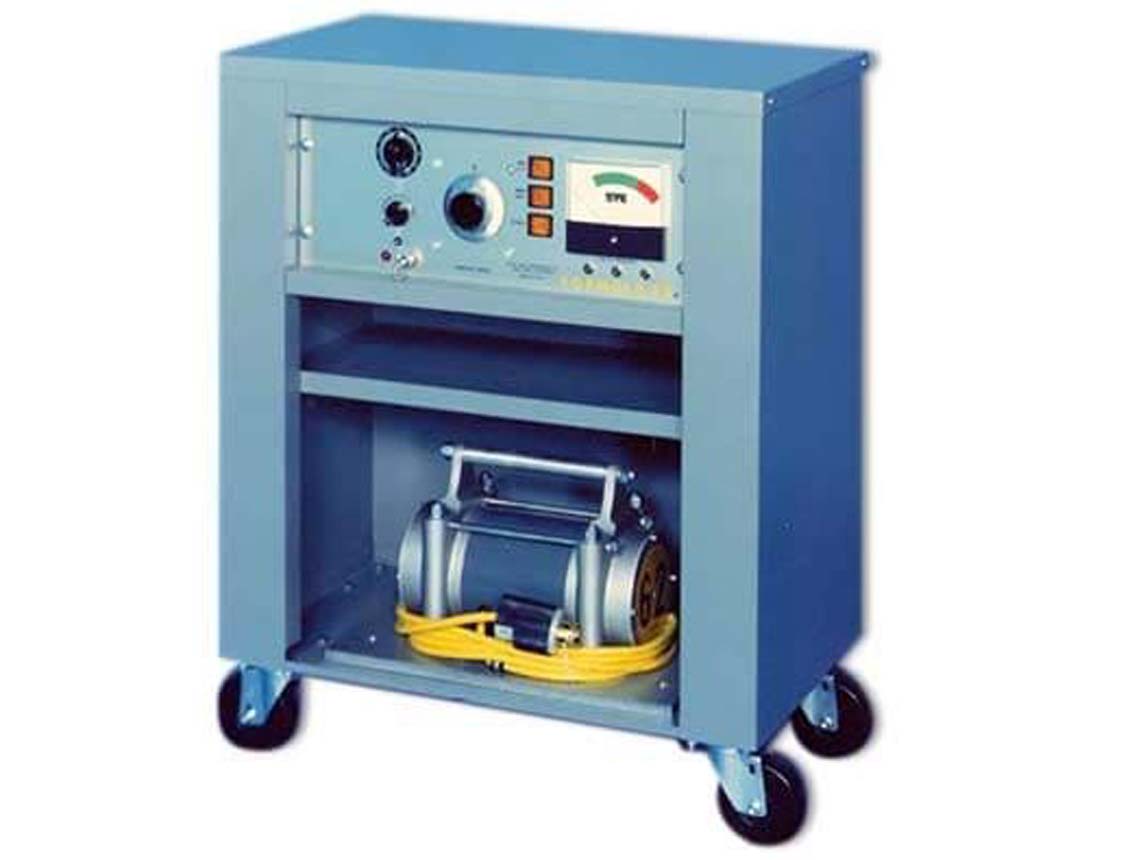
At-Site capability Mobile process at point of manufacture/repair Normally furnace-based
Production flexibility Can be integrated into manufacturing/repair sequence Dependent on furnace scheduling and handling
shapes
Stabilize Heavy Components Before Precision Machining

Why Transport the Component to the Furnace When the VSR Process Can Be Brought to the Component?

Formula 62® VSR combines non-thermal residual-stress management with At-Site mobility, rapid treatment cycles and documented process monitoring.
Managing Residual Stresses in Critical Sugar-Mill Components

Operational Cost & Application Consultation

GNSR helps customers evaluate the practical and economic implications of VSR for specific components and production processes, including transportation, handling, furnace processing, energy, cleaning and turnaround.

Where Formula 62® VSR Can Reduce Production Costs

01 Reduced transportation and handling costs
02 Reduced post-treatment cleaning
03 Potential reduction in machining and material loss through optimized machining allowances for suitable applications
04 Lower exposure to heat-related rework
05 Faster production turnaround

From Days to Minutes

Typical VSR treatment can be completed in approximately 30–60 minutes per treatment zone, depending on component and application, allowing the component to proceed promptly to subsequent manufacturing operations.

When Is VSR the Right Engineering Choice?

01

Large or heavy components

02

Precision-critical fabrications

03

Complex welded structures

04

Time-critical production and repairs